About
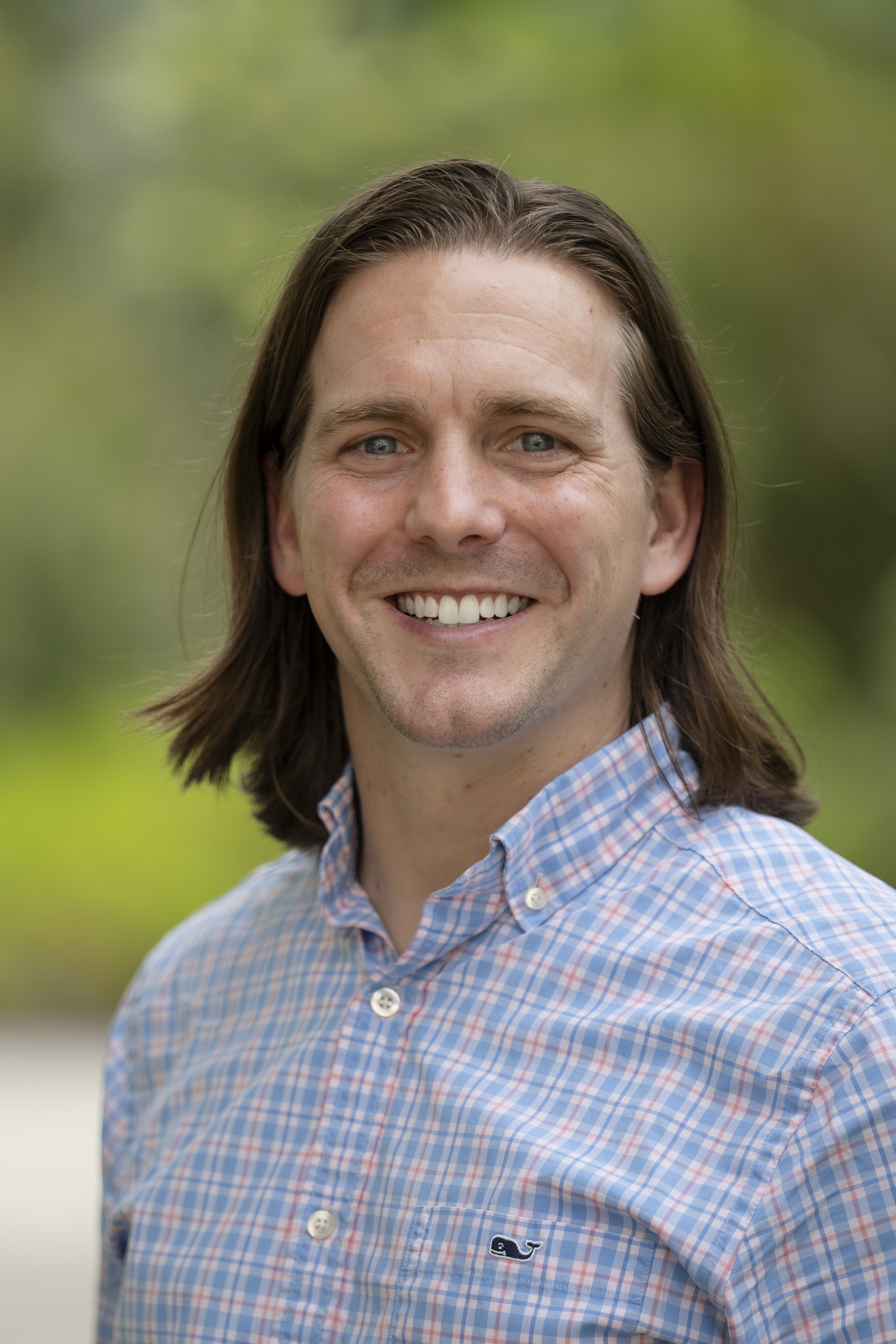
I'm an engineer who follows the gradient of curiosity to learn new things. I started my career designing wind tunnel models and jet engine components, got curious about all the data we were collecting, taught myself signal processing and data science, and eventually pivoted into machine learning. That path took me from aerospace manufacturing floors (where I built computer vision systems and won a company-wide innovation competition) to leading a study on autonomous maritime systems that was briefed up to the Secretary of the Navy. Now at CMU's Software Engineering Institute, I'm exploring how AI agents can help humans coordinate swarms of drones in disaster response scenarios. The thread connecting it all? I'm drawn to hard problems at the edge of what's possible, and I'll pick up whatever skills I need to tackle them.
Work
Right now at CMU's SEI, I'm leading a project comparing classical, learning-based, and agentic planners for disaster response. The goal is to figure out how to help one person effectively control a whole swarm of drones through natural speech interfaces. I also ran our autonomy testing and evaluation work, where I've implemented behavior cloning via diffusion policy and led the development of regret-based explainability tools that generate adversarial scenarios to expose vulnerabilities in multi-agent systems before they hit the real world.
Before CMU, I spent time at Pratt & Whitney after they acquired the precision manufacturing startup I'd joined. I stood up their data analytics operations building statistical process controls, predictive maintenance systems, and computer vision models for automated defect detection. That work led to joining their newly formed data science team, where I helped roll out MLOps infrastructure and worked on a rapid part assessment project with P&W Canada that resulted in five patents. Earlier in my career, I cut my teeth as a mechanical engineer at Triumph/Calspan, designing wind tunnel models and leading the engineering effort on GE's 6th generation adaptive engine program. And it all started with a NASA internship building a non-magnetic rotating gimbal fixture for spacecraft magnetic testing—including components for Hubble and the Solar Dynamics Observatory.
Outside Work
When I'm not wrangling AI agents, I'm usually wrangling something else. I recently became a dad, which is its own kind of challenging problem-solving. I love to travel and have wandered through Ireland, Korea, Italy, the Caribbean, and Canada. I'm big on fitness (I've qualified for the Boston Marathon) and I'm a pretty serious handyman. I've taken houses down to the studs and brought them back to fully finished, which honestly isn't that different from debugging a complex system: you just keep going until it works.
About this Site
This website is built with FastHTML, a Python web framework for fast, scalable web applications with minimal, compact code. It borrows heavily from Jack Hogan's great work.
Find my full resume here, or to find out what I'm up to at the moment, check out my Now page.